
Search is no longer a single game. In 2026, your content competes on three battlefields simultaneously – Google’s blue links, featured snippets & voice answers, and AI chatbot citations. Miss any one of them and you’re invisible to a massive chunk of your audience.
If you’re still running a pure “rank for keywords” SEO strategy, you’re already behind. The rise of Answer Engine Optimization (AEO) and Generative Engine Optimization (GEO) has fundamentally changed how content reaches users. This article breaks down all three disciplines, backed by real data, and shows you exactly how to build a strategy that wins across every format.
2026 Search Reality Check: Over 58% of all Google searches end without a click (zero-click searches). AI Overviews appear in over 40% of informational queries. Google processes 8.5 billion searches daily. If you’re only optimizing for blue-link clicks, you’re optimizing for less than half the search landscape.
What Are SEO, AEO, and GEO?
Before diving into strategy, let’s clearly define each discipline and understand what problem it solves:
SEO (Search Engine Optimization) is the practice of optimizing your website and content to rank higher in traditional search engine results pages (SERPs) — primarily Google and Bing. It covers keyword strategy, backlink acquisition, technical site health, Core Web Vitals, and E-E-A-T (Experience, Expertise, Authoritativeness, Trustworthiness) signals. SEO’s primary goal is generating organic clicks to your website.
AEO (Answer Engine Optimization) is the practice of structuring content so that search engines can extract and surface it as a direct answer — without requiring the user to click through to your site. AEO targets featured snippets, People Also Ask (PAA) boxes, knowledge panels, and voice search responses from assistants like Siri, Alexa, and Google Assistant. While AEO may result in zero-click impressions, it builds brand visibility and topical authority at massive scale.
GEO (Generative Engine Optimization) is the newest discipline — optimizing content to be cited, referenced, or summarized by AI-powered tools like ChatGPT, Google AI Overviews, Perplexity, Microsoft Copilot, and Claude when users ask questions. GEO is about becoming the trusted source that AI models pull from when generating their answers. Unlike SEO, you don’t need to rank #1 to be cited — you need to be the most authoritative and data-rich source.
Think of it this way: SEO gets you the click. AEO gets you the answer box before the click. GEO gets your brand into the AI response before the search even happens.
What Are SEO, AEO, and GEO?
Before diving into strategy, let’s clearly define each discipline and understand what problem it solves:
SEO (Search Engine Optimization) is the practice of optimizing your website and content to rank higher in traditional search engine results pages (SERPs) — primarily Google and Bing. It covers keyword strategy, backlink acquisition, technical site health, Core Web Vitals, and E-E-A-T (Experience, Expertise, Authoritativeness, Trustworthiness) signals. SEO’s primary goal is generating organic clicks to your website.
AEO (Answer Engine Optimization) is the practice of structuring content so that search engines can extract and surface it as a direct answer — without requiring the user to click through to your site. AEO targets featured snippets, People Also Ask (PAA) boxes, knowledge panels, and voice search responses from assistants like Siri, Alexa, and Google Assistant. While AEO may result in zero-click impressions, it builds brand visibility and topical authority at massive scale.
GEO (Generative Engine Optimization) is the newest discipline — optimizing content to be cited, referenced, or summarized by AI-powered tools like ChatGPT, Google AI Overviews, Perplexity, Microsoft Copilot, and Claude when users ask questions. GEO is about becoming the trusted source that AI models pull from when generating their answers. Unlike SEO, you don’t need to rank #1 to be cited — you need to be the most authoritative and data-rich source.
Think of it this way: SEO gets you the click. AEO gets you the answer box before the click. GEO gets your brand into the AI response before the search even happens.
The 2026 Search Landscape — Key Data & Statistics
To understand why all three disciplines matter, you need to see how search behaviour has shifted. The data tells a clear story:
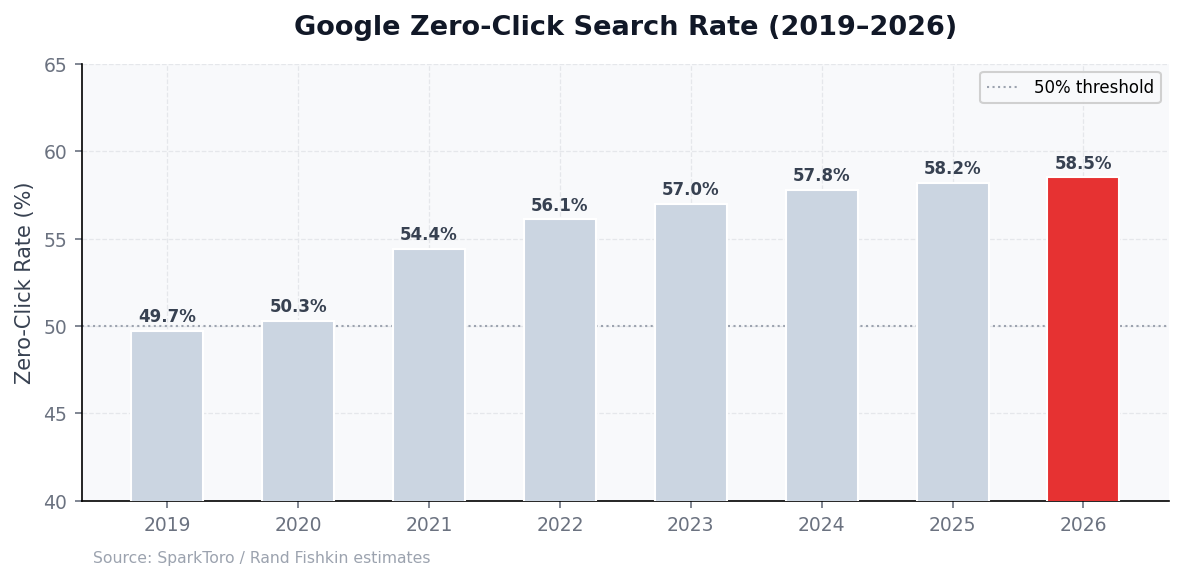 Zero-click searches where a user gets their answer directly from the SERP without visiting any website have grown from 49.7% in 2019 to 58.5% in 2026. This means the majority of Google searches never result in a website visit. For businesses that rely purely on SEO traffic, this trend represents a significant and ongoing threat to organic reach.
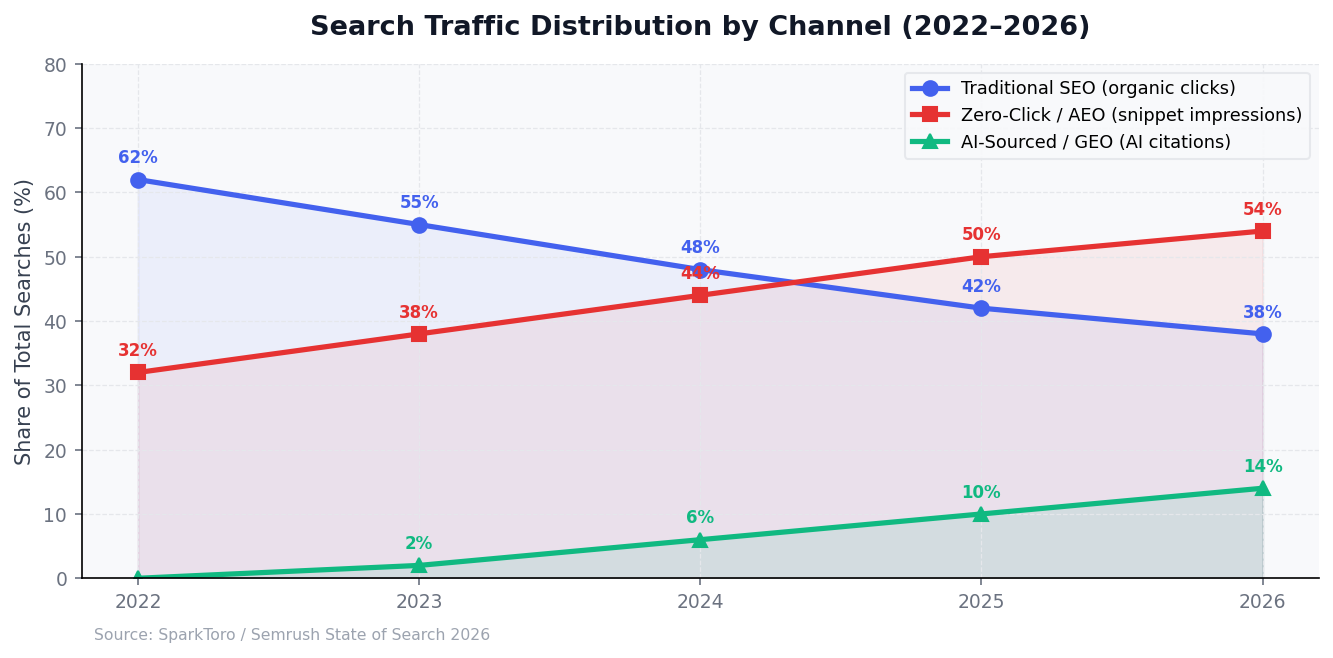 The chart above shows the structural shift in search traffic over five years. Traditional organic clicks have declined from 62% of search interactions in 2022 to an estimated 38% in 2026. Meanwhile, zero-click/AEO impressions have grown to 54%, and AI-sourced GEO traffic practically non-existent in 2022 now accounts for approximately 14% of search interactions and is growing rapidly.
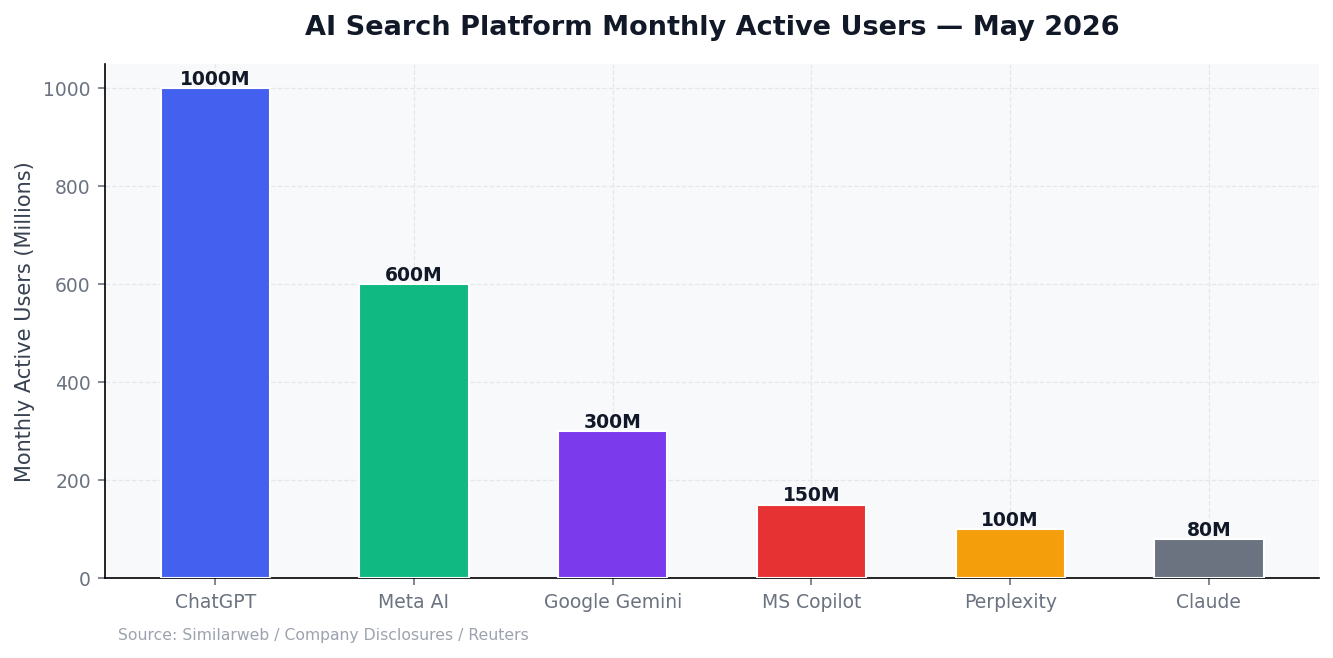
The AI search ecosystem has exploded. ChatGPT alone surpassed 1 billion monthly active users in early 2026, while Meta AI reached 600 million and Google Gemini 300 million. Combined, the top 6 AI platforms now serve over 2.2 billion monthly active users people who are increasingly asking AI tools the same questions they once typed into Google. If your content isn’t optimized to be cited by these platforms, you’re missing a massive and rapidly growing audience.
SEO in 2026 Still the Foundation, But It’s Evolved
Despite all the disruption, SEO remains the bedrock of digital visibility. It drives the highest volume of intentional, high-converting traffic. However, the ranking factors that matter most have shifted significantly over the past three years.
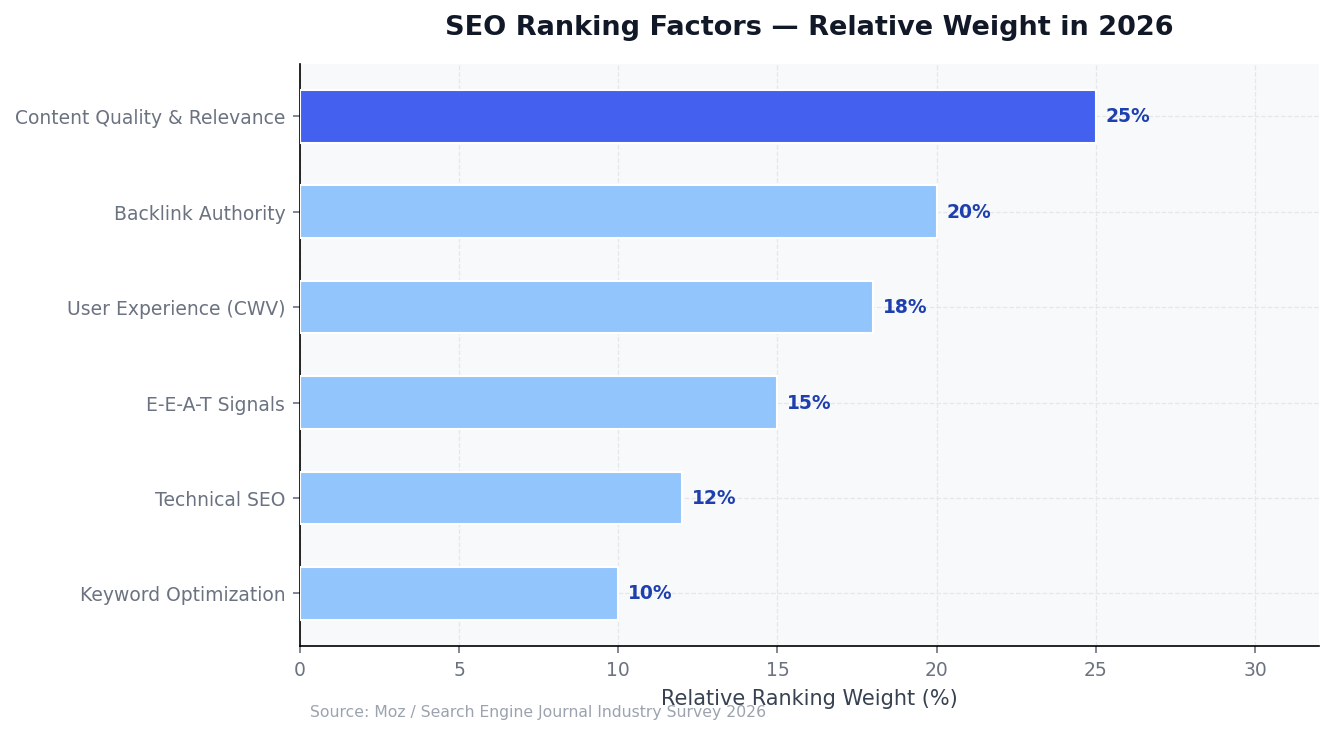
Content quality and relevance now carry the most weight at 25%, overtaking backlink authority (20%) for the first time. User experience signals — measured through Core Web Vitals like Largest Contentful Paint (LCP), Cumulative Layout Shift (CLS), and Interaction to Next Paint (INP) — account for 18%. E-E-A-T signals, which Google has dramatically expanded and deepened since 2023, now represent 15% of ranking influence. Pure keyword optimisation, once the dominant strategy, has fallen to just 10%.
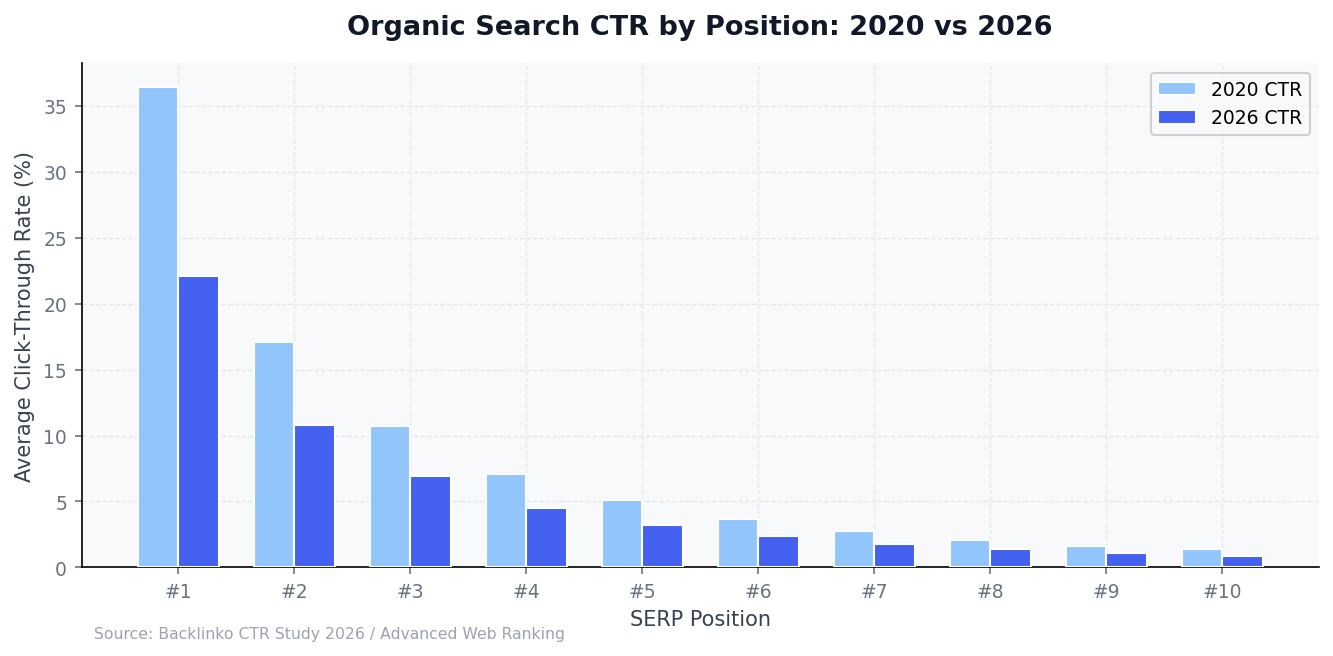
Even if you rank #1, the rewards are smaller than they used to be. A first-position result earned an average CTR of 36.4% in 2020. By 2026, that’s fallen to 22.1% — a 39% decline. The second and third positions have seen similar erosion. Featured snippets, AI Overviews, ads, and shopping results take up significantly more SERP real estate, pushing organic results below the fold on many queries. This is precisely why AEO and GEO are now essential complements to SEO, not optional add-ons.
Key SEO priorities for 2026
- Achieve Core Web Vitals green scores across all pages (LCP under 2.5s, INP under 200ms)
- Build comprehensive author profiles with real credentials, social profiles, and publication history
- Create topic clusters: one authoritative pillar page supported by 8–15 supporting cluster pages
- Prioritise E-E-A-T by including first-hand case studies, original research, and verifiable expertise
- Optimise for searcher intent, not just keywords — match content format to what Google returns for each query
AEO -Winning the Answer Box
Answer Engine Optimization is about one thing: making it easy for search engines to extract a direct, reliable answer from your content and surface it without requiring a click. AEO targets featured snippets (the “position zero” result above organic listings), People Also Ask boxes, voice search results, and knowledge graph entries.
The business case for AEO is compelling even though it often produces zero-click results. Research consistently shows that brands appearing in featured snippets receive a significant boost in brand recognition and trust — users associate snippet answers with authority. When those users later search with commercial intent, they’re more likely to click on the brand they already recognise from the snippet.
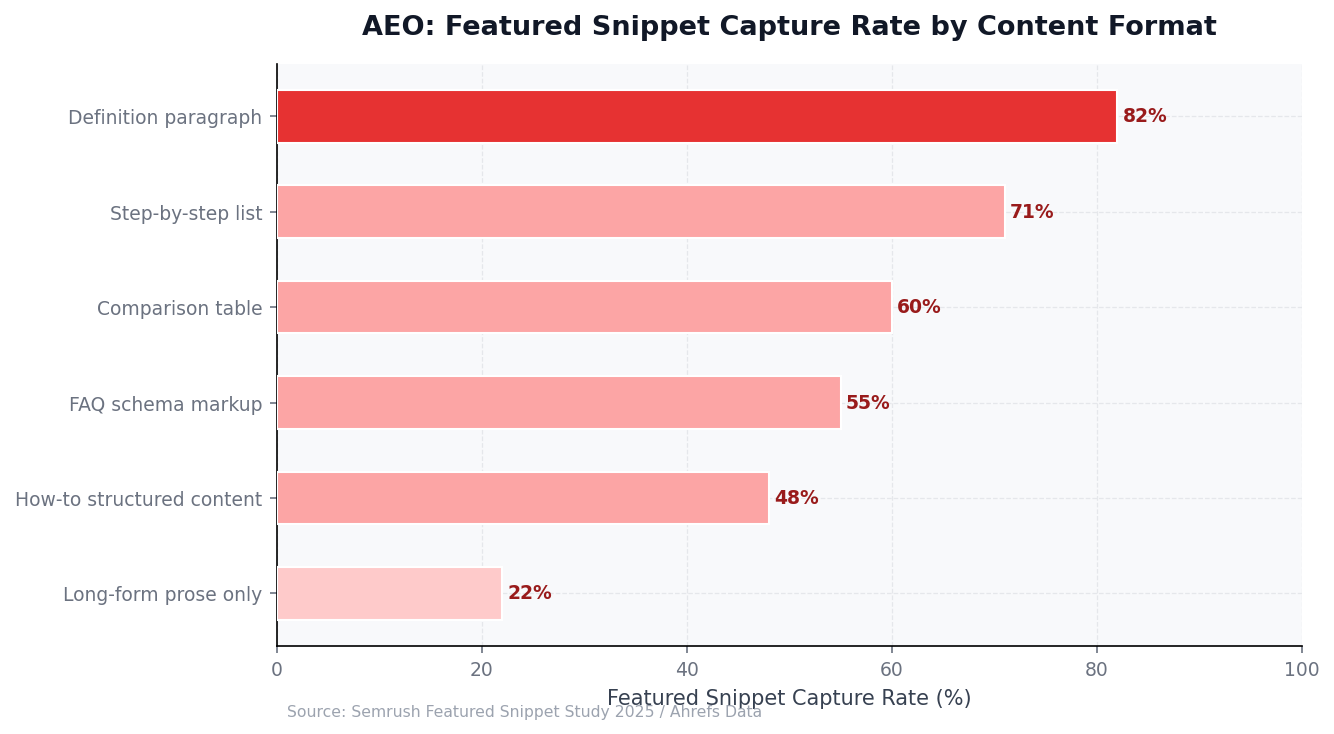
The data is clear on which content formats win snippets. Definition paragraphs capture featured snippets 82% of the time when they appear in search results — the highest of any format. Step-by-step lists follow at 71%, making them ideal for how-to and tutorial content. Comparison tables (60%) and FAQ schema (55%) are also highly effective. Long-form prose without structure only captures snippets 22% of the time, regardless of quality.
The AEO Optimisation Checklist:
- Lead with a direct answer (40–60 words): Open every major section with a concise, standalone answer to the section’s question. Google extracts this first clear paragraph.
- Use question-formatted H2/H3 headings: “What is X?” “How does X work?” “What’s the difference between A and B?” These mirror real search queries and signal to Google that you’re answering specific questions.
- Implement JSON-LD schema markup: Add FAQ, HowTo, and Article structured data to every content piece. This gives Google machine-readable confirmation of your content’s structure.
- Optimise for voice queries: Voice search answers average 29 words and are typically drawn from featured snippets. Write conversational, direct answers to natural-language questions.
- Target PAA questions within each article: Research 5–8 “People Also Ask” questions for every topic you cover and answer each one within the article. This dramatically increases your chances of capturing multiple PAA boxes.
- Use tables for comparisons and lists for steps: Structure data in a way that Google can directly display — this applies to pricing tables, feature comparisons, step sequences, and ranked lists.
GEO -The AI Citation Race
Generative Engine Optimization is the newest and fastest-growing discipline in the digital marketing toolkit. When someone asks ChatGPT, Perplexity, Google AI Overviews, or Microsoft Copilot a question, the AI generates a response by synthesising information from sources it considers authoritative. Your goal is to be one of those sources.
GEO operates on a fundamentally different logic than SEO. There are no keyword rankings, no backlink charts, no position tracking. Instead, the question is: when AI models discuss your industry, your category, or your topic – do they cite your content? Do they reference your brand? Do they treat you as an authority?
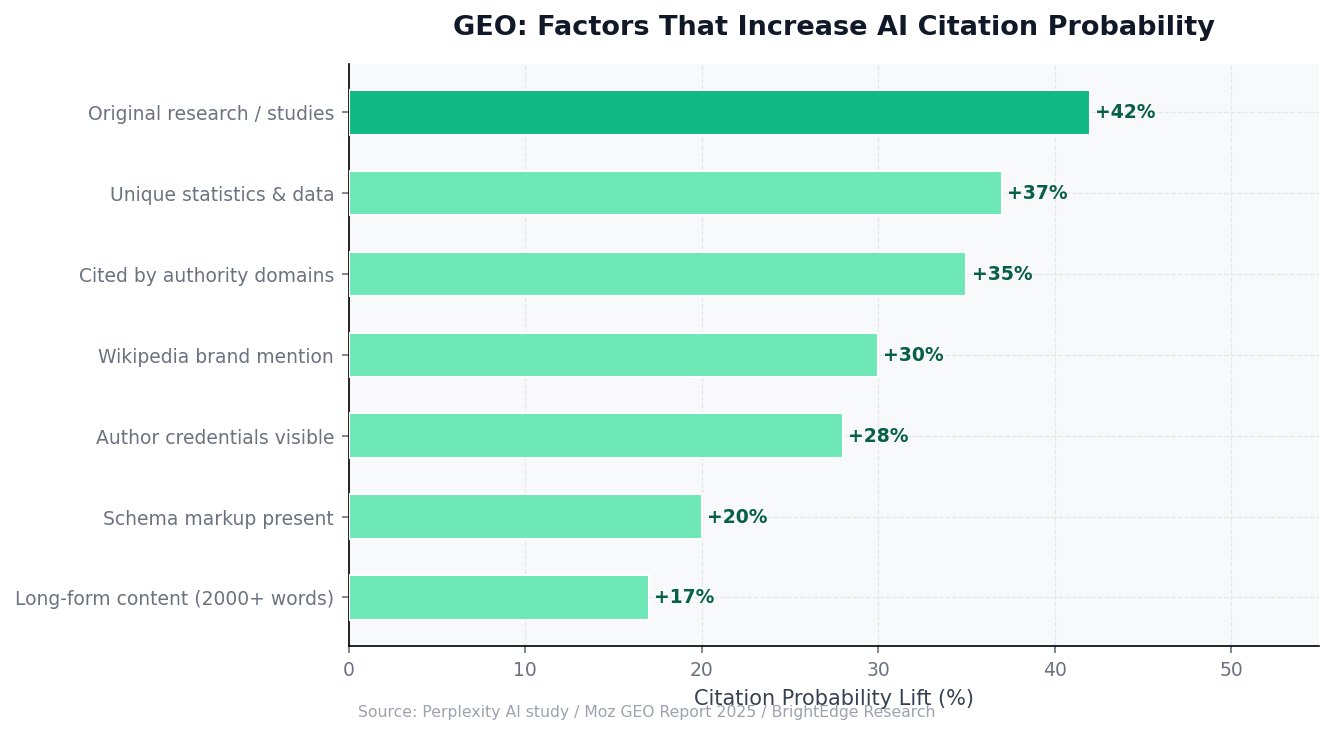
The most significant driver of AI citation probability is original research (+42% lift), followed closely by unique statistics and data (+37%) and being cited by authoritative domains (+35%). This makes intuitive sense: AI models are trained to value primary sources and original data over content that simply summarises or aggregates information from elsewhere.
A Wikipedia brand mention provides a +30% lift — because Wikipedia is one of the most heavily weighted sources in AI training data. Author credentials being visible on the page (+28%) reflects the E-E-A-T parallel: AI models, like Google, prefer content associated with verifiable human expertise.
GEO Tactical Playbook:
- Publish original data: Commission surveys, run experiments, or publish proprietary analytics reports. AI models consistently cite unique statistics that can’t be found elsewhere. Even a small original study (100+ respondents) makes your content a citable primary source.
- Build brand authority offline: Wikipedia mentions, podcast appearances, news coverage in national or industry media, and industry awards all contribute to how AI models perceive your brand’s trustworthiness. GEO requires PR thinking, not just content thinking.
- Use clear entity markup: Ensure your brand, people, products, and services are represented as clear, consistent entities. Use consistent naming across your website, social profiles, and press coverage. Add Organization schema with sameAs links to your Wikipedia page, LinkedIn, and Crunchbase profiles.
- Get cited by authoritative domains: When Forbes, TechCrunch, or a respected industry publication links to your research, AI models treat your content as having been validated by a trusted third party. This dramatically increases citation probability.
- Write comprehensively: Long-form content (2,000+ words) that covers a topic end-to-end is +17% more likely to be cited. AI models prefer comprehensive sources because they can draw on more information from a single reference.
- Monitor your AI share-of-voice: Weekly, manually query your top 20 brand and category terms in ChatGPT, Perplexity, and Google AI Overviews. Track whether your brand is mentioned, whether you’re cited as a source, and how your competitors compare. Build a simple spreadsheet — this is your GEO dashboard.
Head-to-Head: SEO vs AEO vs GEO
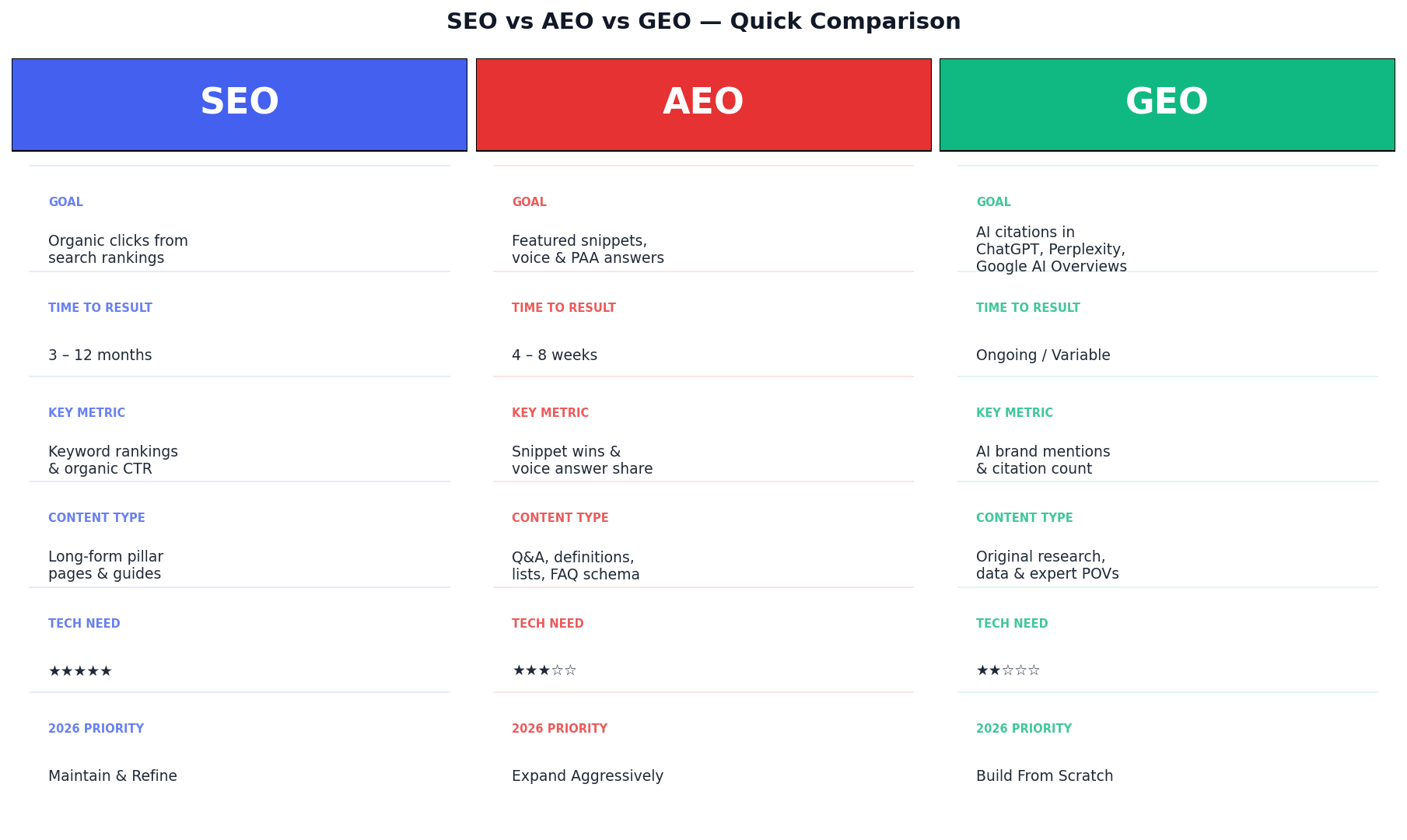
Understanding how the three disciplines differ across key dimensions is essential for allocating budget, time, and resources effectively:
The Unified Strategy – How to Win All Three
The smartest brands in 2026 don’t choose between SEO, AEO, and GEO. They build a content architecture that serves all three simultaneously. The key insight is that a single piece of content, correctly structured and distributed, can rank organically (SEO), win a featured snippet (AEO), AND be cited by AI platforms (GEO) all at the same time.
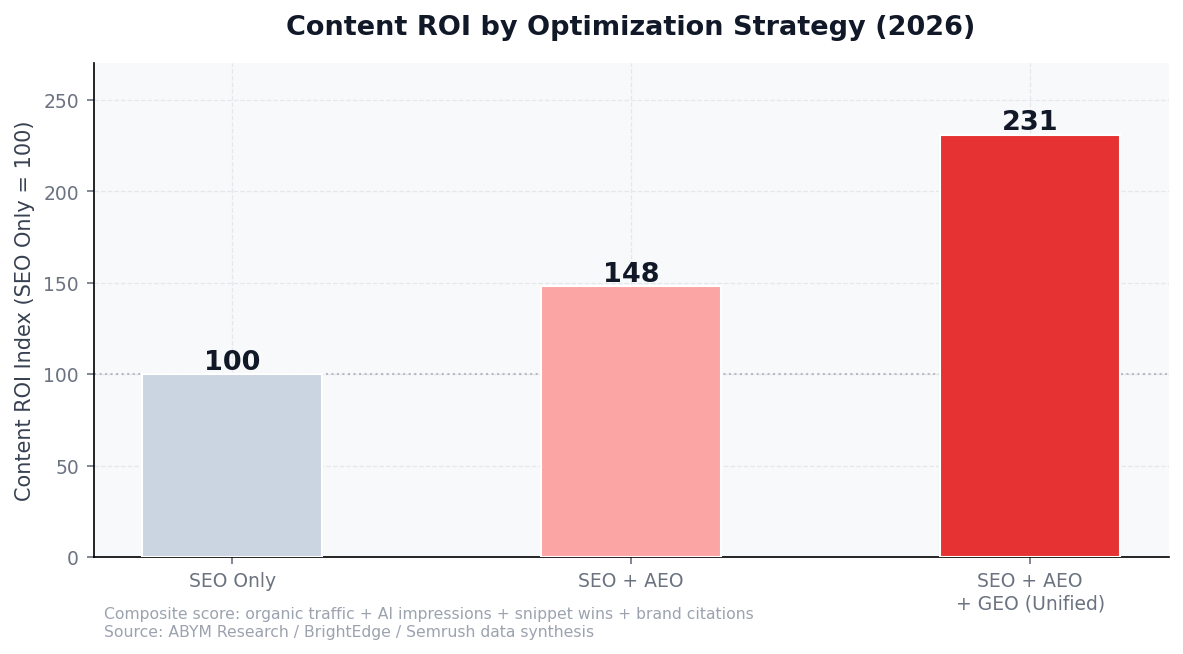
The data backs this up. A unified SEO + AEO + GEO content strategy delivers a 131% higher ROI than SEO alone, when measured across the composite of organic traffic, AI impressions, snippet wins, and brand citations. Even a partial SEO + AEO strategy delivers 48% higher returns than SEO in isolation.
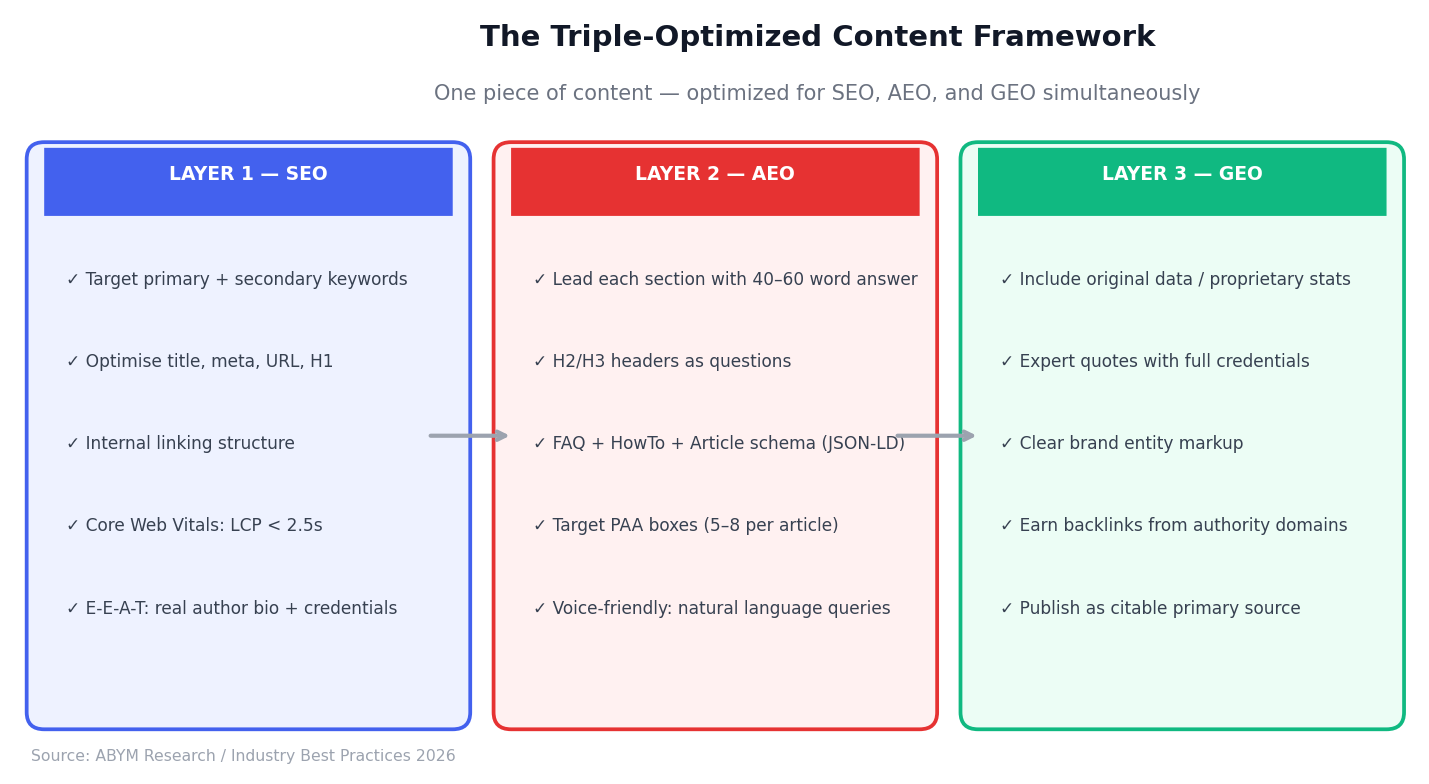
The Triple-Optimized Content Framework — Step by Step:
- Start with keyword intent (SEO layer): Research your primary and secondary keywords. Identify searcher intent — informational, navigational, commercial, or transactional. Map the content to the right funnel stage. Ensure technical on-page basics are perfect: title tag, meta description, URL, H1, internal links, image alt text, schema.
- Structure for extraction (AEO layer): Open every major section with a direct 40–60 word answer. Format headings as questions. Add FAQ, HowTo, or Article schema. Keep answer paragraphs tight, factual, and confidence-signalling. Target PAA questions throughout the piece.
- Add citable proof (GEO layer): Include original data points, expert quotes with full credentials, a unique insight or proprietary finding. Make your content the primary source, not a summary. Add Organization schema and author structured data. Ensure your brand entity is clearly and consistently represented.
- Distribute for authority signals: Promote the content through PR, social, and email to earn backlinks and brand citations. Repurpose key data into shareable formats — charts, infographics, LinkedIn posts — that drive additional mentions and links.
- Monitor all three channels: Track keyword rankings and CTR (SEO), snippet appearances and PAA wins (AEO), and AI citation frequency via Perplexity, ChatGPT, and Google AI Overviews (GEO). Build a monthly reporting dashboard that covers all three.
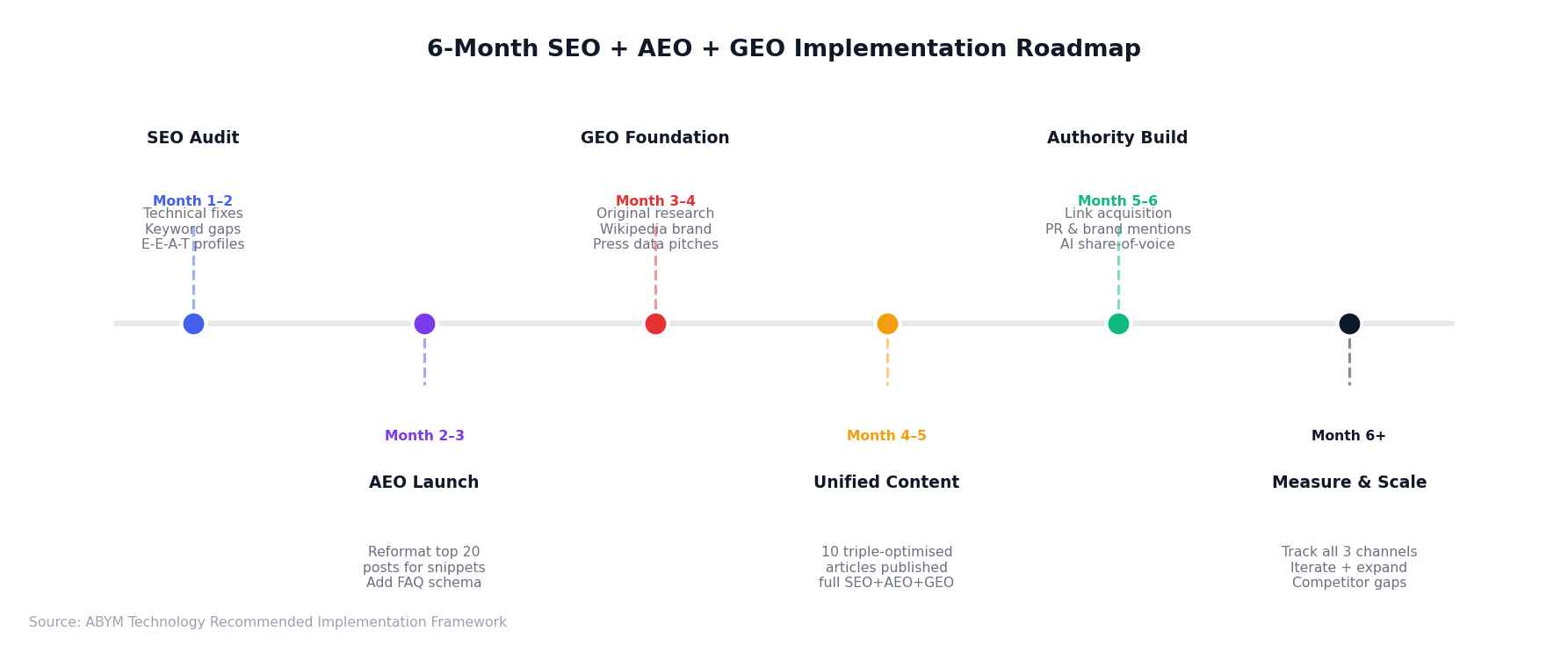
- Month Implementation Roadmap:
Conclusion
The era of single-channel search optimisation is over. In 2026, winning digital visibility requires a three-channel approach: SEO to capture high-intent organic clicks, AEO to dominate answer boxes and voice search, and GEO to ensure your brand is the authoritative source that AI platforms cite when generating responses.
The good news is that these three disciplines reinforce each other. The E-E-A-T work you do for SEO strengthens your GEO citations. The structured content you create for AEO snippets is exactly the kind of clear, reliable content AI models prefer. A genuine unified strategy doesn’t mean three times the work — it means building better content, once, with all three layers embedded from the start.
The brands that begin building their GEO presence today — publishing original research, earning authoritative mentions, and becoming credible entities in AI training data — will have a compounding advantage that’s nearly impossible to replicate in two or three years. The window to get ahead is open now.
Start with your SEO foundation, expand into AEO immediately, and begin building your GEO authority today. The search landscape will only continue to fragment — the brands with unified strategies will capture share from those still playing a single-channel game.


