
AbyM Blog

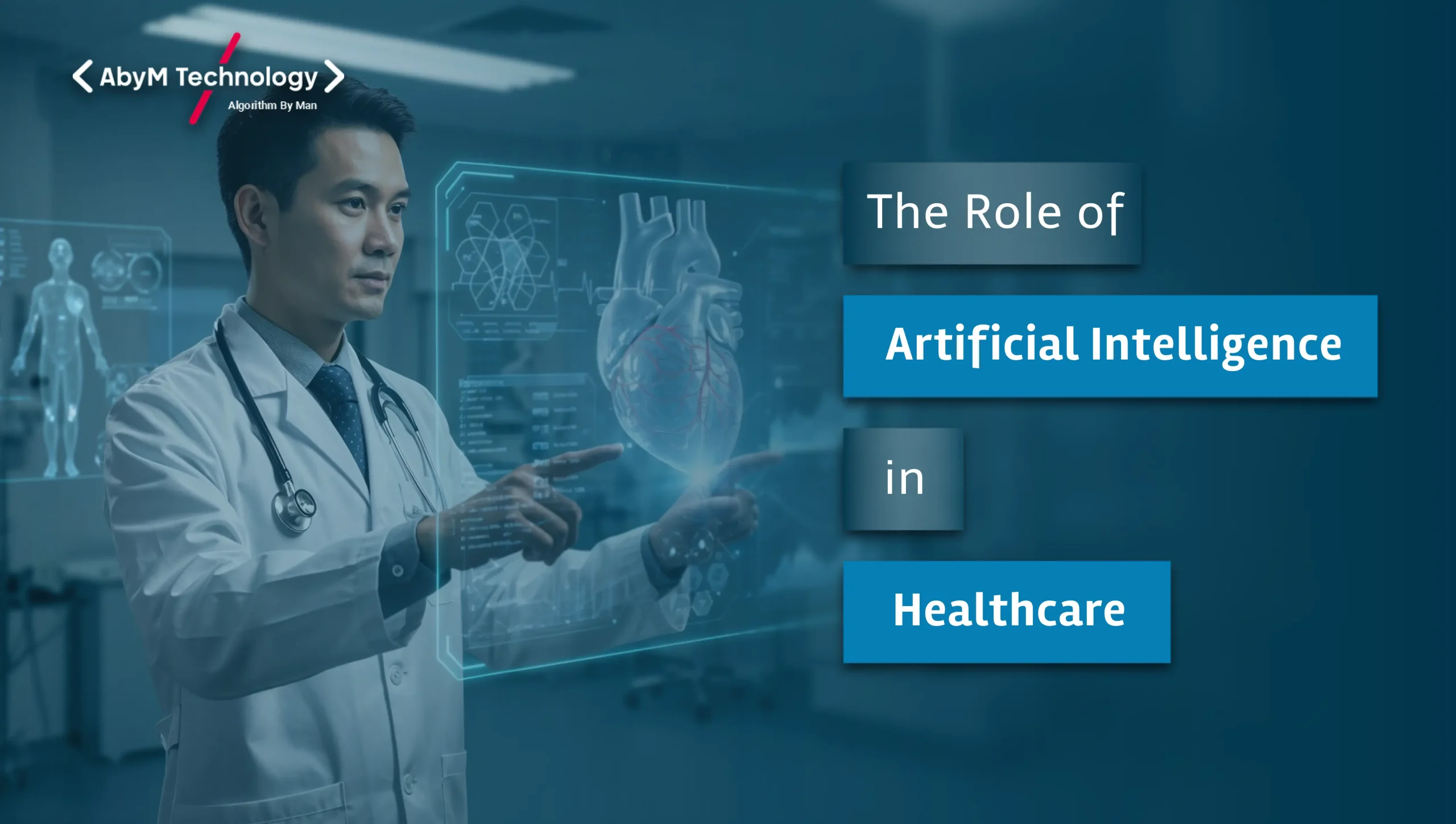
The Role of Artificial Intelligence in Healthcare

The Role of Artificial Intelligence in Healthcare

Artificial intelligence (AI) is transforming nearly every aspect of modern life, and healthcare is one of the fields experiencing the most significant and impactful changes. From improving diagnostic accuracy to accelerating drug development and enhancing patient engagement, AI is reshaping how medical care is delivered worldwide. As healthcare systems face increasing challenges—rising patient loads, chronic disease management, physician shortages, and escalating costs—AI offers powerful tools to make processes smarter, faster, and more efficient.

This blog explores in detail the role of AI in healthcare, its applications across clinical and administrative domains, and the way it is shaping the future of medicine.

How Artificial Intelligence Is Revolutionizing Healthcare

The integration of AI into healthcare represents a revolution rather than a simple evolution. With machine learning, deep learning, natural language processing (NLP), and robotic automation, AI systems are now capable of understanding complex medical data, assisting clinicians in decision-making, predicting patient outcomes, and offering support that enhances the patient experience.

The global healthcare industry continues to generate enormous amounts of data—from electronic health records (EHRs) to clinical imaging, genomics, wearable devices, and public health reporting. AI is uniquely suited to process and learn from this data, uncovering patterns and insights that humans may not be able to detect. As a result, AI contributes to more accurate diagnoses, personalized treatments, and improved disease surveillance, all while reducing costs and administrative burdens.

AI in Diagnosis and Treatment

1. Improved Diagnostic Accuracy

One of AI’s most powerful contributions is in medical diagnostics. AI systems can analyze medical images such as X-rays, MRIs, CT scans, and ultrasounds with remarkable precision. Trained on thousands or even millions of images, AI models learn to identify abnormalities such as tumors, fractures, or infections.

    In fields like radiology and pathology, AI often assists clinicians by highlighting suspicious areas or suggesting potential diagnoses. In some cases, AI performance matches or exceeds that of human specialists. For example, AI-powered tools can detect early-stage cancers, diabetic retinopathy, and cardiovascular abnormalities faster and with fewer errors than traditional methods.

    AI doesn’t replace doctors—it enhances their ability to make informed decisions, reduces interpretation time, and minimizes the risk of oversight.

    2. Personalized Medicine

    The shift from “one-size-fits-all” to precision medicine has been made possible largely because of AI. By analyzing a patient’s genomic information, medical history, lifestyle, radiomic data, and laboratory results, AI systems can:

    • Recommend tailored treatment plans
    • Predict individual responses to medications
    • Assess disease progression
    • Help clinicians choose the optimal therapy

    This is especially critical in cancer treatment, where AI can develop individualized chemotherapy and radiation plans based on tumor behavior.

    3. Early Disease Detection and Public Health Surveillance

    AI plays a crucial role in early disease detection by analyzing large datasets and identifying patterns long before symptoms appear. Machine learning models can predict:

    • Risk of developing diabetes or heart disease
    • Onset of neurological disorders
    • Likelihood of hospital readmissions

    In public health, AI helps track and predict epidemics or pandemics by analyzing data from hospitals, travel patterns, social media, and environmental sensors. This proactive approach allows governments to prepare responses and allocate resources more effectively.

    AI in Drug Discovery and Development

    1. Accelerated Drug Research

    Traditional drug discovery can take over a decade and cost billions of dollars. AI dramatically speeds up this process by analyzing scientific literature, chemical databases, and biological information to identify promising drug molecules.

    Machine learning models can predict:

    • How a molecule interacts with the body
    • Possible side effects
    • Toxicity levels
    • Success probabilities during clinical trials

    This reduces the time and cost associated with laboratory testing and helps pharmaceutical companies bring effective drugs to market faster.

    2. Vaccine Development

    AI proved invaluable during recent global health crises by helping researchers identify viral components—such as spike proteins—that trigger strong immune responses. By analyzing mutations and protein structures, AI assists scientists in designing vaccines that are effective, safe, and adaptable to emerging strains.

    AI in Healthcare Operations and Management

    1. Automation of Administrative Tasks

    Healthcare workers often spend significant time on administrative responsibilities such as billing, scheduling, coding, and updating patient records. AI-powered automation tools streamline these processes, reducing human error and freeing up valuable time for patient care.

    Examples include:

    • Automated appointment reminders
    • Smart billing and claims processing
    • Efficient EHR management

    This not only lowers operational costs but also reduces clinician burnout.

    2. Resource Allocation and Predictive Modeling

    Hospitals frequently face challenges in managing patient flow and resource distribution. AI helps solve these issues by forecasting:

    • Patient admissions
    • Emergency room demand
    • Inventory needs
    • Staff scheduling

    Predictive modeling ensures that hospitals are prepared with adequate staff, beds, and equipment, preventing overcrowding and improving patient outcomes.

    3. Robotic-Assisted Surgery and Rehabilitation

    AI-powered robotic systems support surgeons by providing enhanced precision, stability, and improved visualization. These systems enable minimally invasive surgeries that reduce recovery time and complications.

    AI also plays a role in rehabilitation through:

    • Robotic exoskeletons
    • Automated physiotherapy assistance
    • Monitoring patient compliance

    These advancements enhance surgical outcomes and rehabilitation effectiveness.

    AI in Patient Engagement and Support

    1. AI Virtual Assistants and Chatbots

    AI-driven virtual assistants help patients navigate their healthcare journeys by:

    • Answering basic medical queries
    • Scheduling appointments
    • Providing medication reminders
    • Assisting with prescription refills

    These tools improve patient satisfaction and reduce the burden on healthcare staff.

    2. Remote Monitoring Through Wearables and Sensors

    AI integrated with wearable devices enables continuous monitoring of vital signs such as heart rate, glucose levels, oxygen saturation, and sleep cycles. AI algorithms analyze this data to detect abnormalities and notify caregivers or clinicians.

    This is especially beneficial for seniors, individuals with chronic illnesses, and patients requiring long-term care.

    3. Mental Health Support

    AI-based mental health applications provide personalized emotional support, cognitive-behavioral therapy (CBT), and mood tracking. Virtual therapists can identify patterns in speech or behavior indicative of emotional distress, providing early intervention opportunities.

    Challenges and Ethical Considerations

    While AI promises significant benefits, it also brings challenges:

    • Data privacy and security: Sensitive patient data must be protected from breaches.
    • Bias in AI algorithms: Models trained on non-diverse datasets may produce skewed results.
    • Transparency and accountability: Clinical AI decisions must be explainable and reliable.
    • Regulation and compliance: Ensuring AI tools meet medical standards is crucial.

    Balancing innovation with ethical responsibility is key to ensuring AI enhances healthcare without compromising patient rights.

    Future of AI in Healthcare

    The future of AI in healthcare is bright, with emerging possibilities including:

    • Fully integrated AI hospitals
    • Predictive preventive medicine
    • AI-assisted genetic editing and advanced genomics
    • Real-time digital twins for treatment simulation
    • Autonomous clinical decision support systems

    As AI technologies evolve, their integration with human expertise will reshape healthcare into a more precise, accessible, and patient-centered system.

    FAQs

    Q1. What is the role of AI in healthcare?

    A1. AI helps improve diagnosis, personalize treatments, streamline operations, and enhance patient care.

    Q2. How does AI assist in diagnosis?

    A2. AI analyzes medical images and clinical data to detect diseases with high accuracy.

    Q3. Can AI replace doctors?

    A3. No. AI supports clinicians but does not replace human judgment.

    Q4. What is personalized medicine?

    A4. It is a treatment approach tailored to an individual’s genetic and clinical data, often enabled by AI.

    Q5. How does AI help in drug discovery?

    A5. AI identifies potential drug candidates and predicts their effectiveness, speeding up research.

    Q6. Are AI-powered surgeries safe?

    A6. Yes. Robotic-assisted surgeries offer improved precision and reduced risk when supervised by surgeons.

    Q7. How does AI improve hospital management?

    A7. AI automates administrative tasks and predicts resource needs.

    Q8. Is AI used in mental health?

    A8. Yes. AI applications provide therapy support, mood tracking, and early detection of mental health issues.

    Q9. How does AI benefit remote patient monitoring?

    A9. AI analyzes data from wearables to detect abnormalities and alert healthcare providers.

    Q10. What are the risks of AI in healthcare?

    A10. Risks include data breaches, biased algorithms, and lack of transparency.

    AbyM Technology

    AbyM Technology is a leading IT and digital solutions company offering premium website development, mobile app development, software solutions, and digital marketing services. With over a decade of expertise, we help businesses grow through innovative technology, creative design, and result-driven strategies. Our team specializes in building responsive websites, user-friendly mobile apps, and effective SEO, social media, and branding solutions. At AbyM Technology, we focus on quality, timely delivery, and complete client satisfaction.

    Categories

    Subscribe to Our Blog

    Related Post

    Other Related Articles