
AbyM Blog

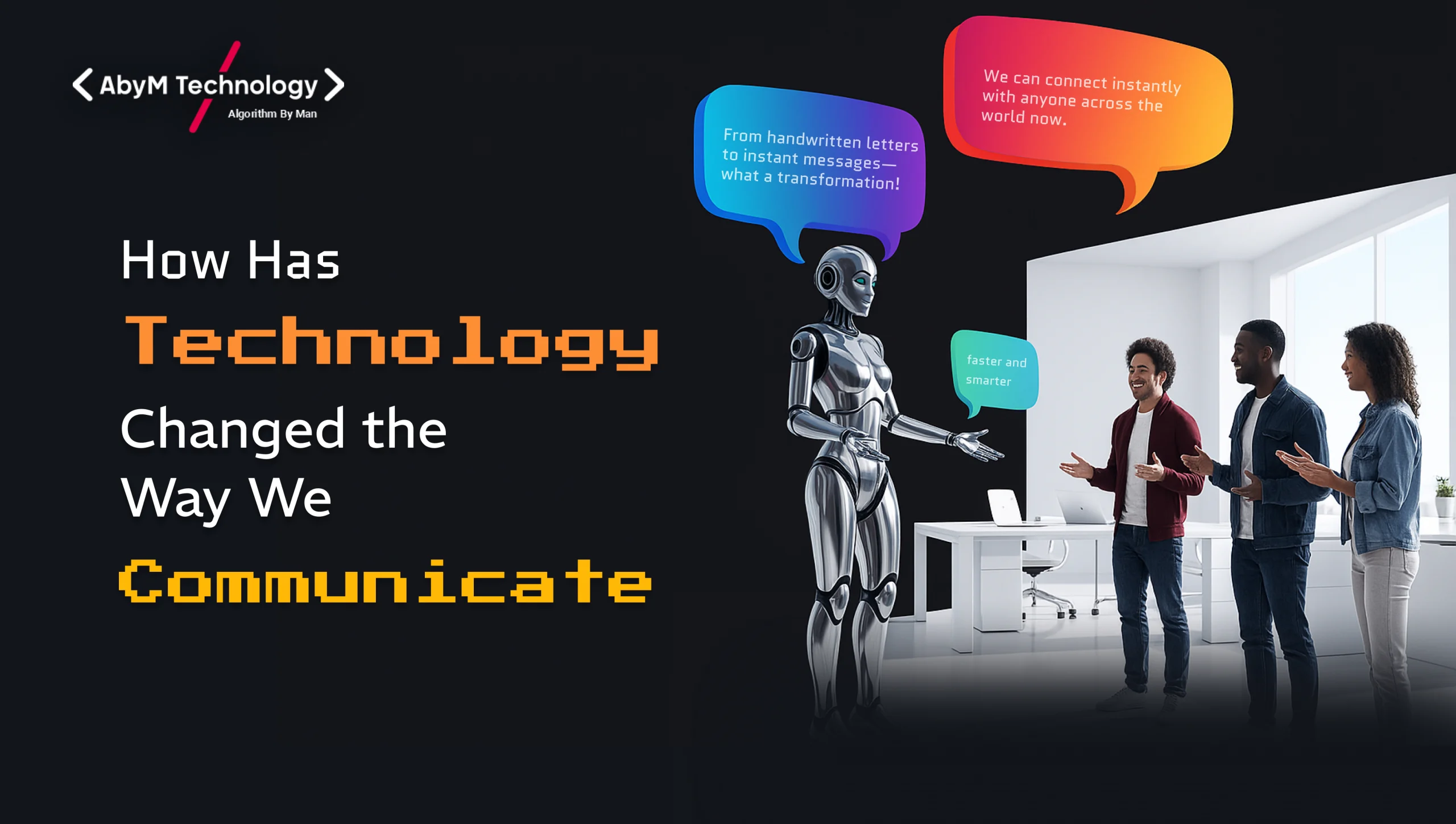
How Has Technology Changed the Way We communicate

How Has Technology Changed the Way We communicate

Technology has completely changed the way people talk and stay connected. Just a few decades ago, people wrote letters or made long phone calls to communicate. Today, a simple click can send a message across the world in seconds.

From text messages to video calls, and from emails to social media, technology has made communication faster, easier, and more global than ever before. But at the same time, it has also created new challenges. We talk more—but sometimes connect less.

Let’s explore how technology has improved communication, what problems it has created, and how we can find the right balance.

The Positive Side: How Technology Has Improved Communication

1. Instant and Global Connection

In the past, sending a message to someone in another country could take weeks. Today, you can talk to anyone, anywhere, instantly.

Apps like WhatsApp, Facebook Messenger, Instagram, Zoom, and Email make it possible to chat, share photos, and even see people in real-time. Whether you’re talking to a friend in another city or attending a virtual meeting with coworkers from different countries, distance no longer matters.

    This has brought people closer together and made the world feel smaller and more connected.

    2. Easier Collaboration and Teamwork

    Technology has also made it easier for people to work together, even if they are not in the same place.

    Tools like Google Meet, Microsoft Teams, Zoom, and Slack help teams share ideas, hold meetings, and manage projects online. You can now brainstorm, share files, and get feedback instantly.

    This is especially helpful for companies with employees in different parts of the world. It saves time, money, and travel costs while keeping everyone on the same page.

    3. Better Accessibility for Everyone

    One of the most amazing benefits of technology is how it helps people with disabilities and those in remote areas communicate easily.

    • People with hearing problems can use live captions or text messages.
    • Those who are blind can use screen readers that convert text to speech.
    • People living in villages or faraway places can connect with others through the internet.

    This means that technology has made communication more inclusive and open to everyone, no matter their physical ability or location.

    4. New and Fun Ways to Express Ourselves

    Technology has also made communication more colorful and expressive. Instead of just words, we now use emojis, GIFs, memes, and stickers to show emotions.

    Sometimes, a simple emoji can say what words can’t—like a heart  for love or a laughing face to show joy. These tools make our chats more personal and fun.

    They also help people express their feelings more easily, especially in text messages where tone can be hard to understand.

    The Negative Side: What We’re Losing

    Even though technology has made communication easier, it has also brought some problems.

    1. Less Face-to-Face Interaction

    Today, many people prefer texting or calling instead of meeting in person. While it’s convenient, it also means we spend less time talking face-to-face.

    When we only chat online, we miss out on things like body language, eye contact, and real emotional connection. Over time, this can make relationships feel less personal and more distant.

    2. Loss of Authenticity (Real Human Feelings)

    Talking through a screen can never fully replace talking in person. In real life, we can sense someone’s mood by their voice or facial expression. But online, it’s easy to hide how we really feel.

    Someone might send “I’m fine” in a message, but in person, you’d notice if they looked sad or tired. Online communication can sometimes feel less genuine and more controlled.

    3. Misunderstandings and Confusion

    Texting and online chats are quick—but sometimes, they cause confusion. Without tone of voice or facial expressions, messages can be misunderstood.

    For example, a short reply like “OK” might sound angry or cold when it’s actually neutral. Emojis help, but they can’t always fix the problem. Misunderstandings can lead to unnecessary arguments or hurt feelings.

    4. Information Overload and Privacy Concerns

    We are surrounded by messages every day—emails, texts, social media notifications, news alerts, and more. It can feel overwhelming!

    Being online all the time can also make it hard to focus or relax. On top of that, many people worry about privacy. Who is seeing your messages or storing your data? Can hackers or companies misuse your personal information?

    Technology connects us—but it also requires us to be careful about how we share our lives online.

    Finding Balance: Mixing Technology and Real Communication

    Technology isn’t bad—it’s how we use it that matters. To get the best of both worlds, we need to balance digital communication with real, personal interaction.

    Here are some simple tips:

    1. Meet in person when possible. Don’t replace every meeting or chat with a message. Real conversations build stronger relationships.
    2. Use video or voice calls for important matters. Seeing or hearing someone adds warmth and understanding that text can’t give.
    3. Take breaks from screens. Turn off notifications, spend time offline, and give yourself time to relax.
    4. Think before sending. If a message could be misunderstood, rephrase it or talk directly.
    5. Protect your privacy. Be careful about what personal information you share online.
    6. Enjoy both sides. Use emojis, memes, and social media—but also value face-to-face smiles, hugs, and laughter.

    The key is to let technology help you communicate, not replace your human connections.

    FAQs

    Q1. How has technology made communication easier?

    A1. Technology allows people to talk instantly from anywhere in the world through phones, video calls, and social media. Messages that once took days now take seconds.

    Q2. Can technology replace face-to-face communication?

    A2. No, not completely. Technology helps us stay in touch, but it can’t replace the emotions and body language that come with in-person conversations.

    Q3. Why do people use emojis and GIFs?

    A3. Emojis and GIFs help show emotions in text messages. They make conversations more fun and help people understand feelings that words might not express clearly.

    Q4. What are some negative effects of digital communication?

    A4. Too much screen time can reduce real-life interactions, cause misunderstandings, and even lead to stress or loneliness. It can also raise privacy and data safety concerns.

    Q5. How does technology help people with disabilities communicate?

    A5. There are tools like speech-to-text apps, screen readers, video calls with sign language, and captions that make communication easier for people with hearing or vision problems.

    Q6. Is social media helping or harming communication?

    A6. Both. Social media helps people stay connected and share ideas, but it can also spread misinformation or create pressure to look “perfect” online. Balance is important.

    Q7. What is information overload?

    A7. It means getting too much information at once—messages, emails, and notifications—that makes it hard to focus or relax. Managing screen time helps reduce this stress.

    Q8. Can online communication cause misunderstandings?

    A8. Yes, because tone and emotion are hard to read in text. Without voice or facial cues, people can easily misinterpret what others mean.

    Q9. How can we protect our privacy while communicating online?

    A9. Use strong passwords, don’t share personal details publicly, enable two-factor authentication, and think before posting or clicking unknown links.

    Q10. What’s the best way to balance technology and real communication?

    A10. Use technology wisely. Enjoy the benefits—speed, global reach, and fun tools—but don’t forget to meet people, listen deeply, and have real conversations.

    Conclusion

    Technology has changed communication forever. We can now talk to anyone, anywhere, at any time. It has brought families closer, helped businesses grow, and given people more freedom to share their voices.

    But at the same time, we should not forget the power of real human connection. A text message can’t replace a smile, a hug, or the warmth in someone’s eyes.

    So, let’s enjoy the best of both worlds—the speed of technology and the heart of real communication. Use your gadgets wisely, talk to people sincerely, and always remember that behind every screen is a real person with real feelings.

    Because communication isn’t just about sending messages—it’s about connecting hearts. 

    AbyM Technology

    AbyM Technology is a leading IT and digital solutions company offering premium website development, mobile app development, software solutions, and digital marketing services. With over a decade of expertise, we help businesses grow through innovative technology, creative design, and result-driven strategies. Our team specializes in building responsive websites, user-friendly mobile apps, and effective SEO, social media, and branding solutions. At AbyM Technology, we focus on quality, timely delivery, and complete client satisfaction.

    Categories

    Subscribe to Our Blog

    Related Post

    Other Related Articles